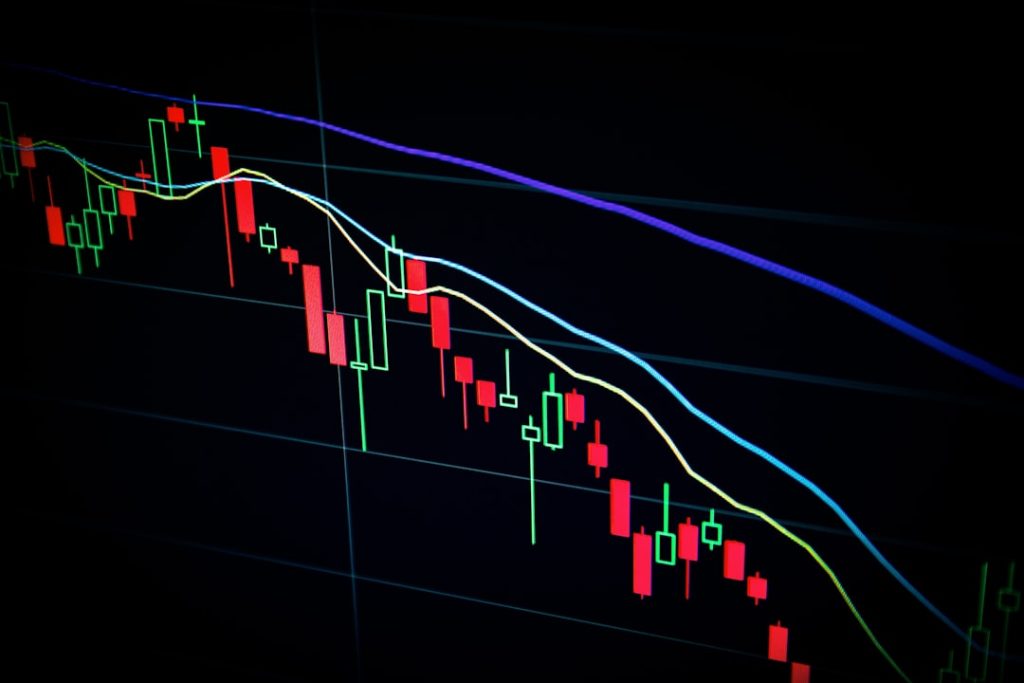
Momentum trading shouldn’t work. In theory, efficient markets and algorithmic systems should eliminate exploitable patterns within milliseconds. Yet momentum strategies have generated consistent returns for over 200 years across every major asset class—and they’re thriving in today’s forex and crypto markets. The $7.5 trillion daily forex market and crypto’s relentless 24/7 volatility create ideal conditions for momentum traders who understand the psychological forces, technical tools, and market structures that keep these strategies profitable. This isn’t about chasing hype or gambling on price swings. It’s about leveraging persistent behavioral patterns that algorithms amplify rather than eliminate. Here’s why momentum still works—and how retail traders can harness it across high-volatility markets.
The Core Principle: Why Trends Persist
What Momentum Trading Actually Means
Momentum trading operates on a deceptively simple premise: assets climbing upward tend to keep climbing, while those in decline continue falling. This isn’t wishful thinking or market folklore. It’s a measurable phenomenon that’s generated consistent returns for over two centuries across every major asset class studied.
The strategy identifies securities showing strong recent performance and rides that wave until signs of reversal appear. In forex, this might mean holding a long position on USD/JPY as it breaks through multi-year resistance levels. In crypto, it could involve capturing Bitcoin’s explosive moves during bull market phases when each breakthrough attracts fresh capital.
What separates momentum from simple trend-following is the focus on relative strength and acceleration. You’re not just asking whether EUR/USD is trending up—you’re measuring how forcefully it’s moving compared to recent history and alternative pairs.
The Psychology Behind Market Momentum
Momentum persists because human psychology creates predictable patterns in market behavior. Three cognitive biases fuel this phenomenon:
Anchoring causes traders to fixate on recent price levels as reference points, creating resistance to rapid repricing even when fundamentals shift. When Ethereum breaks $3,000 after months of consolidation, many participants mentally anchor to that level, creating hesitancy that allows the trend to extend.
Herding behavior amplifies existing trends as traders pile into winning positions and abandon losers. The $7.5 trillion daily forex market demonstrates this constantly—once institutional flows establish direction in a major pair, retail traders follow the momentum rather than fight it.
Delayed overreaction means markets initially underreact to new information, then gradually catch up as the implications become clear. This creates the sustained directional moves momentum traders exploit.
The fact that momentum strategies have delivered 8-12% annual returns across global markets for three decades proves this isn’t a temporary glitch. It’s a fundamental feature of how markets process information through human decision-making.
Why Forex Markets Are Momentum Goldmines
The forex market’s $7.5 trillion in daily trading volume creates a unique environment where momentum strategies thrive with exceptional consistency. This massive liquidity pool ensures that price movements aren’t easily manipulated by individual players, allowing genuine trends to develop and persist with remarkable clarity. When the EUR/USD moves, it moves with the weight of institutional conviction behind it.
Liquidity Meets Opportunity
Deep liquidity translates directly into tradable momentum. Major currency pairs like EUR/USD, GBP/USD, and USD/JPY offer tight spreads and minimal slippage, meaning momentum traders can enter and exit positions without significantly impacting price. This matters enormously when riding a trend for hours or days. Unlike thinly traded assets where a single large order can reverse direction, forex pairs maintain their trajectories because the sheer volume of transactions smooths out random noise and amplifies directional moves.
The practical result? Technical patterns actually work. Support and resistance levels hold with greater reliability. Breakouts follow through more consistently. When 200 million traders and institutions are watching the same chart levels, those levels become self-fulfilling prophecies that momentum traders can exploit.
How Algorithms Amplify Trends
Algorithmic and high-frequency trading systems now account for 70-80% of forex volume, and these systems predominantly operate on momentum principles. When institutional algorithms detect trend formation through statistical models, they pile in programmatically, creating powerful follow-through that extends price movements beyond what fundamental factors alone would justify.
This algorithmic dominance actually benefits retail momentum traders. HFT systems don’t fade trends—they reinforce them. Once a momentum signal triggers across multiple algorithmic platforms, you get cascading order flow in the same direction. A breakout above a key moving average doesn’t just attract human traders; it activates thousands of automated systems simultaneously, generating the kind of sustained directional pressure that momentum strategies require to generate profits.
The Crypto Advantage: 24/7 Momentum Opportunities
Cryptocurrency markets never sleep, and neither does momentum. While forex traders wait through weekend gaps and overnight positioning risk, crypto momentum traders can enter and exit positions at 2 AM on Sunday with the same liquidity they’d find on Tuesday afternoon. This continuous operation fundamentally changes how momentum strategies perform, eliminating the forced exits and reentry friction that plague traditional markets.
Volatility as Fuel for Momentum
Bitcoin’s average daily volatility hovers between 3-5%, compared to the 0.5-1% typical of major forex pairs like EUR/USD. This isn’t just a statistical curiosity—it’s the difference between capturing meaningful trends in hours versus waiting days or weeks. When Ethereum surges 8% in a single session, momentum indicators light up with signals that would take a currency pair weeks to generate. Altcoins push this even further, with 10-20% daily swings during strong trending periods creating compressed momentum cycles that complete in 24-48 hours rather than the traditional 3-12 month lookback periods used in equity momentum strategies.
This accelerated volatility means crypto traders can deploy shorter timeframes while maintaining the statistical significance that momentum strategies require. A 4-hour chart in crypto often provides the same momentum clarity that a weekly chart offers in forex, allowing traders to compound gains through multiple momentum cycles while traditional markets complete a single trend.
The Social Media Multiplier Effect
Crypto momentum feeds on information differently than traditional assets. A single tweet from a prominent figure can ignite momentum that sustains for days, while forex pairs typically require central bank statements or major economic releases to break from range-bound behavior. This social media amplification creates a unique advantage: when forex markets consolidate and offer limited momentum opportunities, crypto assets often trend aggressively based on protocol upgrades, regulatory news, or shifting sentiment across Twitter and Reddit communities.
The lower correlation with traditional financial assets means crypto momentum strategies can run profitably even when currency pairs chop sideways. While EUR/USD grinds through a 50-pip range, Bitcoin might be establishing a fresh uptrend based entirely on crypto-native catalysts that forex traders never see on their economic calendars.
Essential Momentum Indicators That Actually Work
Two technical tools dominate momentum trading across both forex and crypto markets: the Relative Strength Index (RSI) and the Moving Average Convergence Divergence (MACD). These aren’t just popular because everyone uses them—they work because they quantify price momentum in ways that align with actual market behavior.
RSI and MACD in Practice
RSI measures the speed and magnitude of recent price changes on a scale from 0 to 100. Readings above 70 signal overbought conditions where momentum may be exhausted, while readings below 30 indicate oversold territory. The sweet spot for momentum trades? Catching assets that break above 50 RSI with strong volume, signaling the beginning of a sustained move.
MACD tracks the relationship between two moving averages (typically 12-period and 26-period), with a 9-period signal line. When the MACD line crosses above the signal line, it confirms bullish momentum. When it crosses below, bearish momentum takes over.
The real edge comes from combining these indicators:
- Confirmation setup: Wait for RSI to break above 50 and MACD to cross bullish before entering long positions
- Divergence signals: When price makes new highs but RSI doesn’t, momentum is weakening—prepare to exit
- Volume validation: Strong momentum moves should coincide with increasing volume in crypto markets
Timeframe Selection for Each Market
Forex pairs require different lookback periods than crypto assets due to their volatility differences. For major forex pairs like EUR/USD, standard RSI settings (14 periods) work well on 4-hour and daily charts. Crypto traders often shorten RSI to 9 or 11 periods on hourly charts to capture faster momentum cycles.
During high-volatility events—Fed announcements for forex, protocol upgrades for crypto—reduce your indicator periods by 20-30% to stay responsive to accelerating momentum.
Cross-Asset Momentum: Combining Forex and Crypto
Running momentum strategies across both forex and cryptocurrency markets creates a unique diversification advantage that single-asset traders miss. The correlation between major forex pairs and crypto assets typically hovers between 0.1 and 0.3, meaning their price movements remain largely independent. When EUR/USD grinds through a low-volatility consolidation period, Bitcoin might be exploding through resistance on the back of institutional buying pressure.
The key to cross-asset momentum lies in recognizing when each market offers superior trending conditions. Forex pairs tend to generate cleaner momentum signals during major economic policy shifts, central bank intervention periods, or geopolitical events that trigger sustained directional moves. The $7.5 trillion daily liquidity ensures these trends develop smoothly with less whipsaw action. Crypto momentum, by contrast, thrives during periods of technological catalysts, regulatory announcements, or risk-on sentiment that drives speculative capital into higher-volatility assets.
Portfolio construction for cross-asset momentum requires careful risk calibration. A balanced approach might allocate 60% of momentum capital to forex positions and 40% to crypto, then adjust these weights based on realized volatility. Since Bitcoin’s average daily volatility runs 3-5% compared to 0.5-1% for EUR/USD, position sizing must compensate. A $10,000 momentum position in EUR/USD might translate to just $2,000-3,000 in Bitcoin exposure to maintain equivalent risk.
Risk distribution works in your favor when one asset class enters a choppy, range-bound phase while the other trends. The 24/7 nature of crypto markets also provides momentum opportunities during forex market closures, creating potential for continuous capital deployment. This dual-market approach smooths equity curves and reduces the psychological strain of sitting idle during low-momentum periods in either market alone.
Managing Momentum Crashes and Risk
Momentum crashes wipe out months of gains in days. When EUR/USD reversed 400 pips in 18 hours during the 2023 Swiss banking crisis, momentum traders without proper stops lost 15-20% of their accounts. The danger isn’t momentum itself—it’s the violent reversals that occur when crowd psychology flips.
When Momentum Fails
Trend exhaustion shows specific warning signs before major reversals. Decreasing volume on new highs signals weakening conviction. Divergence between price action and RSI or MACD readings indicates momentum is fading even as price continues. In crypto markets, when Bitcoin makes new highs but on-chain transaction volume drops, the rally is running on fumes. Watch for parabolic price action—vertical moves that disconnect from moving averages rarely sustain.
Extreme volatility spikes often precede crashes. When Bitcoin’s daily volatility jumps from 3% to 8% while maintaining upward momentum, you’re in the danger zone. This elevated volatility reflects distribution—smart money exiting while retail traders chase.
Protection Protocols
Surviving momentum crashes requires non-negotiable risk management:
- Place stops based on market structure, not arbitrary percentages. Set stops below the most recent swing low for long positions, giving the trade room to breathe while protecting against trend breaks. For EUR/USD, this typically means 30-50 pip stops; for Bitcoin, 2-4% stops depending on timeframe.
- Limit position size to 1-2% account risk per trade. Calculate position size backward from your stop distance. If you’re trading a $10,000 account with a $100 risk limit and a 50-pip stop on EUR/USD, your maximum position is 0.2 lots.
- Scale out as momentum extends. Take 30-50% profits at 2:1 reward-to-risk, then trail stops to breakeven. This locks in gains before reversals hit.
- Avoid pyramiding into parabolic moves. Add to positions during consolidations within trends, not during acceleration phases when reversal risk peaks.
Real Performance: What Returns to Expect
Momentum trading isn’t a lottery ticket to overnight wealth, but it delivers quantifiable edges that separate it from random market participation. Historical data from global equity markets shows momentum strategies producing 8-12% annual returns over three decades—not explosive, but remarkably consistent compared to benchmark indices. These numbers come from actual trading results, not backtested fantasies.
The crypto space tells a more volatile but compelling story. Between 2017 and 2023, momentum-based approaches in cryptocurrency markets generated 15-20% outperformance versus simple buy-and-hold strategies. That advantage stems from crypto’s structural differences: continuous 24/7 trading, higher volatility ranges (3-5% daily for Bitcoin versus 0.5-1% for EUR/USD), and less efficient price discovery that creates exploitable trends.
Here’s the reality check retail traders need: consistency beats home runs. A trader capturing 1-2% monthly gains through disciplined momentum entries, proper position sizing, and tight risk management will dramatically outperform someone chasing 50% monthly targets. The mathematics of compounding favors the steady accumulator. A 12% annual return doubles capital every six years. A 20% return does it in under four.
Institutional momentum funds achieve these returns through systematic processes—scanning hundreds of instruments, maintaining strict entry rules, and cutting losses without emotion. Retail traders can replicate this institutional-grade approach at smaller scale. The edge isn’t exclusive to billion-dollar funds. It requires the same three elements: technical discipline to identify genuine momentum versus noise, risk management that prevents single trades from derailing accounts, and psychological resilience to execute signals when instinct screams otherwise.
Your Next Move: Building a Momentum System
Momentum works because psychological biases persist across market cycles, amplified by algorithmic trading systems that reinforce rather than eliminate trends. The $7.5 trillion forex market provides deep liquidity and clean technical patterns, while crypto’s 24/7 volatility creates compressed momentum cycles that generate multiple opportunities weekly. These markets complement each other perfectly—when one consolidates, the other often trends.
Success demands more than recognizing this opportunity. You need proper indicator combinations (RSI and MACD working together, not in isolation), timeframe selection matched to each market’s volatility profile, and disciplined risk management that survives the inevitable momentum crashes. The traders who compound gains over years understand that 1-2% monthly returns through systematic execution beat the chaos of chasing 50% monthly fantasies.
Start with one market. Master RSI and MACD on a single forex pair or Bitcoin before expanding. Build your indicator fluency, refine your entry timing, and establish position sizing rules that limit single-trade risk to 1-2% of capital. Once you’re consistently profitable in one market, gradually add cross-asset exposure to smooth your equity curve. The edge is real, the opportunity is persistent, and the path forward is clear—execute with discipline, manage risk without compromise, and let momentum do the heavy lifting.