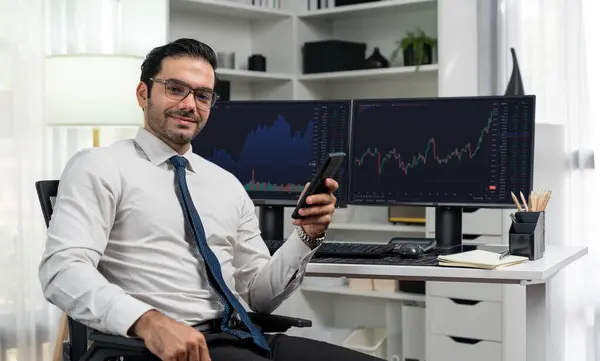
Most conversations about Forex trading revolve around strategy—indicators, patterns, signals, or macroeconomic analysis. While all of that matters, it often ignores something far more fundamental: the environment in which trading decisions are made. The difference between consistent execution and chaotic behavior is often not knowledge, but setup.
Serious traders rarely rely on mobile screens or unstable conditions. They prioritize structured environments, often working from desktop platforms where speed, visibility, and control are significantly improved. This is why many users look into solutions like install PO Trade on PC, aiming to create a workspace where decisions are deliberate rather than reactive.
In this article, we’ll approach Forex from a practical angle—how execution, environment, and discipline interact, and why your setup may be the missing link between theory and results.
Forex Trading Beyond Theory
At a surface level, Forex is simple: you exchange one currency for another and profit from price differences. But in practice, it is a system driven by timing, precision, and behavior under pressure. The market itself is neutral—it does not reward intelligence or punish ignorance. It simply reflects the balance of global capital.
What makes trading difficult is not complexity—it is consistency. The ability to execute the same process repeatedly, without deviation, is what separates professionals from beginners.
Why Trading Environment Matters
Imagine trying to make fast decisions in a noisy room, on a small screen, with limited information. This is how many beginners approach trading—fragmented attention, incomplete data, and constant distractions.
A structured trading environment solves this problem.
- Multiple charts visible at once
- Clear overview of price action
- Faster order execution
- Reduced emotional noise
The environment does not make you profitable—but it removes unnecessary friction.
Desktop vs Mobile Trading
While mobile trading offers convenience, it sacrifices precision.
| Factor | Desktop | Mobile |
|---|---|---|
| Screen size | Large, detailed | Limited |
| Execution speed | Faster | Variable |
| Focus | High | Distracted |
| Analysis quality | Advanced | Basic |
Professionals prefer environments where they can think clearly—not react quickly.

How the Forex Market Moves in Reality
Retail traders often think the market moves because of indicators. In reality, price moves because of liquidity imbalances.
These imbalances are created by:
- Central bank decisions
- Institutional positioning
- Macroeconomic shifts
- Order flow concentration
Indicators only reflect what has already happened. Understanding structure allows you to anticipate what may happen next.
Execution: The Most Underrated Skill
Even with a solid strategy, poor execution can destroy results.
Execution includes:
- Entering at the right moment
- Avoiding hesitation
- Managing trades without emotional interference
- Exiting based on rules, not feelings
A desktop setup improves execution simply by making everything clearer and faster.
Trading Sessions and Focus Windows
Forex operates 24 hours a day, but not every hour is worth trading.
| Session | Behavior | Best Use |
|---|---|---|
| Asian | Slow, ranging | Low-risk setups |
| London | High volatility | Breakouts |
| New York | Momentum continuation | Trend trading |
Serious traders don’t trade all day—they choose specific windows and ignore the rest.
Strategies Are Only Half the Equation
There is no shortage of strategies in Forex. Trend following, breakout trading, scalping—each can work under the right conditions.
What matters more than strategy is consistency.
- Do you follow rules every time?
- Do you stop trading after losses?
- Do you wait for valid setups?
A mediocre strategy executed consistently outperforms a perfect strategy executed emotionally.
Risk Management: The Real Edge
Risk management is the only true edge in trading.
- Risk 1–2% per trade
- Never trade without a stop-loss
- Do not increase position size impulsively
| Risk Level | Outcome |
|---|---|
| 1% | Stable growth |
| 5% | High volatility |
| 10% | Account collapse likely |
The goal is not to win every trade. The goal is to survive long enough to let your edge work.
Psychology: Where Most Traders Fail
Markets do not cause losses—reactions do.
Common psychological traps include:
- Fear of missing out
- Revenge trading after losses
- Overconfidence after wins
- Closing trades too early
A controlled environment helps reduce these reactions by creating structure.
The Importance of Routine
Professional traders operate like athletes—they follow routines.
- Analyze market before session
- Define levels and scenarios
- Execute only planned trades
- Review performance afterward
Without routine, trading becomes random.
Common Mistakes Beginners Make
- Trading on mobile under poor conditions
- Jumping between strategies
- Ignoring risk management
- Overtrading during boredom
Most losses are not caused by the market—they are caused by behavior.
Building a Professional Setup
A proper trading setup includes more than just a platform.
- Stable internet connection
- Multiple charts visible
- Minimal distractions
- Clear workflow
This setup does not guarantee profit—but it creates conditions where discipline is possible.
Forex vs Other Markets
| Market | Liquidity | Volatility | Structure |
|---|---|---|---|
| Forex | Very high | Moderate | Structured |
| Crypto | High | Extreme | Unstable |
| Stocks | High | Variable | Session-based |
Forex offers a balance between stability and opportunity—but only for those who approach it correctly.
Final Thoughts: Execution Over Everything
Most traders spend years searching for better strategies. Few spend time improving execution.
The truth is simple:
- Markets reward consistency
- Consistency requires structure
- Structure depends on environment
Your setup, your tools, and your discipline are not secondary—they are the foundation.
Because in the end, trading is not about predicting the next move.
It is about executing your plan without deviation.
Questions & Answers About Forex Trading
What is Forex trading and why is it so popular?
Forex trading involves buying and selling currencies to profit from price changes. It is popular because the market is open 24 hours a day, has extremely high liquidity, and allows traders to participate with relatively small capital compared to other financial markets.
Can beginners realistically make money in Forex?
Yes, but not immediately. Beginners typically lose money at first due to lack of experience, poor discipline, and emotional decisions. Consistent profitability comes only after developing a structured approach, including risk management and strategy testing.
Why do professional traders prefer desktop platforms?
Desktop platforms provide better visibility, faster execution, and a more focused environment. Traders can analyze multiple charts, track market structure, and make decisions without distractions that are common on mobile devices.
How important is execution speed in Forex trading?
Execution speed is critical, especially during volatile market conditions. Delays of even a few seconds can affect entry price, slippage, and overall profitability. A stable desktop setup often improves execution quality.
What is the biggest mistake new traders make?
The biggest mistake is trading without a clear plan. Many beginners enter trades based on emotions, random signals, or short-term excitement instead of following a tested strategy.
How much money is needed to start Forex trading?
Technically, you can start with as little as $50–$100. However, to apply proper risk management and reduce pressure, many traders prefer starting with at least $500–$1,000.
Is Forex trading risky?
Yes, Forex trading involves significant risk due to leverage and market volatility. However, risk can be managed through position sizing, stop-loss orders, and disciplined execution.
What is the safest Forex trading strategy?
No strategy is completely safe, but trend-following and structured risk-based strategies are generally more stable than aggressive or high-frequency trading methods.
Why do traders lose discipline in real trading?
Emotions play a major role. Fear, greed, and impatience often override logic when real money is involved. This is why many traders perform well in theory but struggle in practice.
How can traders improve consistency?
Consistency comes from following a fixed process: analyzing the market, waiting for valid setups, managing risk, and reviewing performance regularly.
Is mobile trading enough for serious trading?
Mobile trading is useful for monitoring positions, but it is not ideal for analysis or decision-making. Serious traders rely on desktop setups for better control and clarity.
What role does routine play in Forex trading?
Routine helps reduce emotional decisions. By following the same steps every day, traders build discipline and avoid impulsive trades.
How many trades should a beginner make per day?
There is no fixed number, but beginners often benefit from trading less and focusing on high-quality setups rather than quantity.
What is overtrading and why is it dangerous?
Overtrading is entering too many positions without clear signals. It increases risk exposure and often leads to emotional decision-making.
What separates profitable traders from losing ones?
The main difference is discipline. Profitable traders follow rules, manage risk, and avoid emotional reactions, while losing traders often act impulsively.
How long does it take to become profitable in Forex?
It varies, but most traders require several months or even years to develop consistency and confidence in their strategy.
Do traders need to follow news constantly?
Not necessarily. While news affects markets, many traders rely primarily on price action and market structure instead of reacting to headlines.
What is the role of patience in trading?
Patience allows traders to wait for high-probability setups instead of forcing trades. It is one of the most valuable skills in Forex.
Why is risk management more important than strategy?
Even a strong strategy can fail without proper risk control. Risk management ensures survival and long-term growth.
What is the best mindset for Forex trading?
The best mindset is process-oriented. Instead of focusing on profit, successful traders focus on executing their strategy consistently.