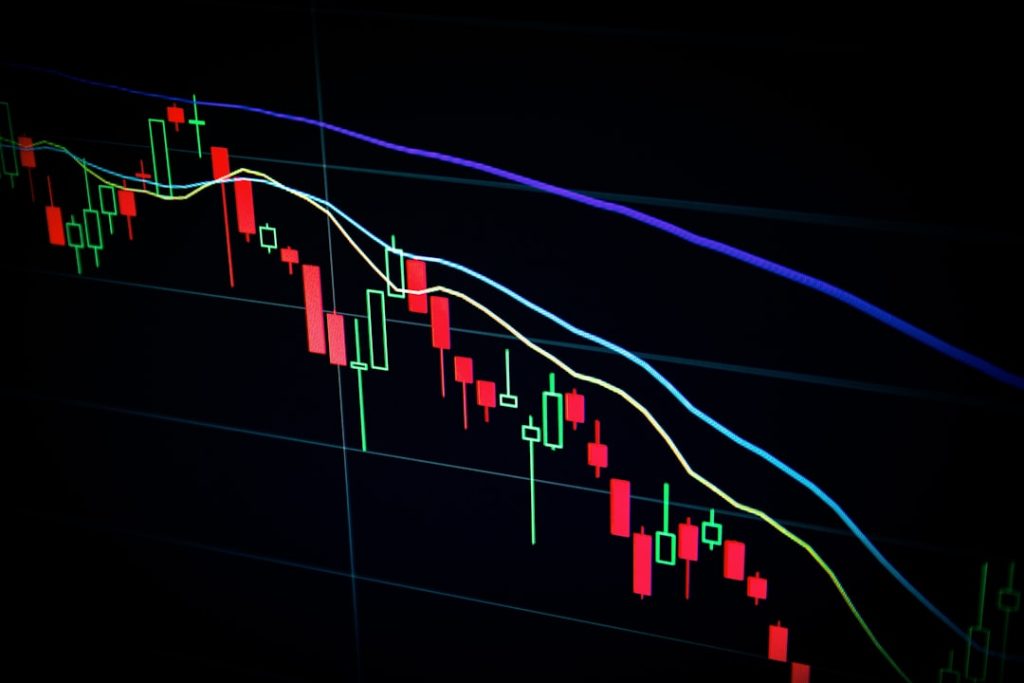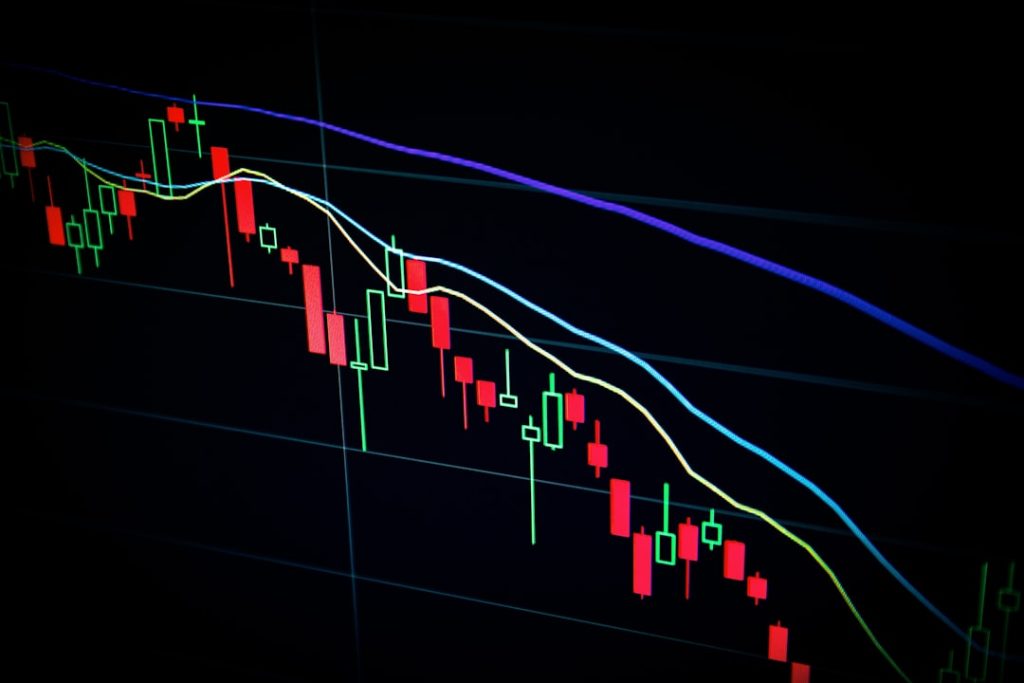
Your EUR/USD position just moved 80 pips against you in five minutes. Bitcoin dropped 8% while you were getting coffee. Your heart races, your palms sweat, and every instinct screams to do something (anything) right now. This isn’t a character flaw. Your brain is biochemically wired to fail in fast-moving markets, and day traders lose money primarily because of psychological factors, not strategy. Once you understand how your amygdala hijacks rational thought, how cognitive biases warp your judgment under pressure, and which specific techniques professionals use to bypass emotion, you can trade volatile Forex and crypto markets without sabotaging yourself. The edge isn’t better indicators. It’s a better brain.
How Your Brain Works Against You in Volatile Markets
When Bitcoin drops 8% in twenty minutes, your brain doesn’t respond like a rational calculator weighing probabilities. It responds like you’re being chased by a predator. The amygdala, a small almond-shaped structure deep in your brain, lights up with activity during sharp market moves, triggering the same fight-or-flight response that kept your ancestors alive on the savanna. In trading, this ancient survival mechanism pushes you toward panic selling at the bottom or revenge buying at the top.
The Amygdala vs. Prefrontal Cortex Battle
The problem isn’t just that fear takes over. It’s that fear actively shuts down the part of your brain you need most. Research from Nature Neuroscience shows that the prefrontal cortex, responsible for rational planning and impulse control, reduces its activity under the stress and time pressure typical of volatile markets. This creates a biological tug-of-war: the amygdala screams “do something now!” while the prefrontal cortex loses its ability to evaluate whether that something makes sense.
You can see this play out in real trades. A EUR/USD position moves 80 pips against you in five minutes. Your amygdala registers threat. Your prefrontal cortex tries to recall your trading plan, but stress has dimmed its processing power. The result? You close the position right before it reverses, or you double down without checking whether your thesis still holds.
Stress Hormones and Trading Performance
Losses make the problem worse. A study in the Proceedings of the National Academy of Sciences found that cortisol levels spike during trading losses, impairing cognitive function and fueling revenge trading behaviors. Cortisol doesn’t just make you feel bad. It actively degrades your working memory, narrows your attention and pushes you toward high-risk, high-reward choices to “get even” fast.
Understanding this biology doesn’t make you immune, but it gives you a recognition system. When you feel the urge to override your stop-loss or chase a breakout you haven’t analyzed, you’re not weak. You’re biochemically compromised. That awareness creates a split-second pause, and sometimes a pause is enough.
The Cognitive Biases That Destroy Fast-Market Performance
Your brain’s hardwiring actively sabotages your trading in volatile markets. Loss aversion hits approximately 2.5 times harder than the pleasure of gains, creating an asymmetric emotional response that derails position management. When a trade moves against you, the psychological pain pushes you to hold and hope. When you’re up, the urge to lock in gains triggers premature exits. The result? You cut your winners short and ride your losers into deeper losses.
Loss Aversion and Position Management
This pain-to-pleasure ratio explains why retail traders consistently violate their own stop-loss rules. A $500 loss feels like losing $1,250 in emotional weight, while a $500 gain delivers only baseline satisfaction. In fast markets where prices swing 5-10% in hours, this bias compounds rapidly. You watch a winning crypto position climb, then exit at the first sign of pullback. That same position turns red, and suddenly you’re paralyzed, waiting for “just a small recovery” before cutting.
The endowment effect amplifies this trap. Once you own a position, you value it more highly than before you bought it. Your brain treats closing a loser as crystallizing failure, so you hold through obvious exit signals.
Confirmation and Recency Bias in Action
Confirmation bias becomes lethal when volatility spikes and information floods in. You’re long Bitcoin, so you focus on bullish tweets and ignore on-chain data showing distribution. You actively filter the market to support your thesis, particularly dangerous when price action demands flexibility.
Recency bias drives inappropriate momentum chasing. Recent price action dominates your perception of probability, causing you to buy strength after extended rallies and sell weakness near bottoms. Overconfidence is widespread among retail traders and manifests as overtrading during volatile periods and systematic underestimation of position risk. You hit three winning trades, then double your size on the fourth, convinced you’ve unlocked the pattern.
Common Psychological Traps in Forex and Crypto Volatility
Mental accounting hits hardest when you’re winning. Traders routinely separate “house money” (profits from recent trades) from their original capital, then take outsized risks with those gains as if they’re free to lose. A trader who grinds out a 12% gain on EUR/USD over two weeks might then throw half of it into a leveraged altcoin position they’d never have touched with their deposit money. The cash is identical, but the brain treats it differently.
The crypto market’s velocity amplifies every bias. Average holding time for cryptocurrency trades collapsed from 130 days in 2020 to just 17 days in 2025 during high-volatility periods. That’s not strategy evolution; it’s impatience and fear disguised as activity. Shorter holds mean more decisions under pressure, more transaction costs, and more opportunities for emotional override to wreck your edge.
Volatility itself scrambles judgment. Retail traders see a 40% jump in trading errors when annualized volatility crosses 30%, according to a 2024 study. Errors here means everything from fat-finger entries to revenge trades after stop-outs. A currency pair that normally swings 50 pips intraday suddenly moves 150, and the psychological load triples. You second-guess your position size, your stop placement, whether that spike is the start of a trend or a liquidity grab.
The endowment effect keeps bad trades alive longer than they deserve. You hold a losing Bitcoin position because you own it, valuing it more highly than an identical setup you’re considering fresh. Cutting it feels like admitting defeat; holding it feels like giving your thesis more time. The market doesn’t care about your attachment. A losing EUR/JPY short and a potential new EUR/JPY short are the same trade, but one comes with emotional baggage that clouds the math.
Professional Strategies to Bypass Emotional Decision-Making
Professional traders remove emotion from high-stakes moments by making decisions before volatility hits. They set stop-losses and take-profit levels when the market is calm, then let automation execute the plan without second-guessing during price swings.
Automation and Pre-Commitment Tools
The most effective way to sidestep fear and greed is to lock in your exit before you enter a trade. Professional traders use automated stop-losses not as suggestions but as non-negotiable orders that execute without requiring a click during a panic. This pre-commitment strategy eliminates the mental bargaining that happens when a position moves against you (“maybe it’ll bounce back in five minutes”).
Modern trading platforms offer several automation tools worth using:
- Bracket orders that simultaneously place your stop-loss and take-profit when you open a position
- Trailing stops that automatically adjust as price moves in your favor, protecting gains without manual intervention
- Time-based exits that close positions after a predetermined duration, preventing you from holding too long during momentum fades
- Position-size calculators that enforce your risk-per-trade limit before you can submit an order
Pre-trade planning frameworks follow a simple structure: write down your entry trigger, your maximum loss in dollars, and your profit target before you look at the order ticket. If you can’t fill out those three fields in under 60 seconds, you don’t have a trade yet.
Mental Preparation Routines
Professional traders spend roughly 30 minutes daily on mental preparation before their sessions start (MarketWatch, 2024). This isn’t meditation for the sake of calm; it’s rehearsal. They review their trading plan, visualize how they’ll respond to specific scenarios (a sudden 5% drop, a fakeout breakout), and set intentions for the session.
Taking regular breaks during high-volatility sessions cuts impulsive trades by 12%, according to research tracking trader behavior during volatile periods. Set a timer for every 90 minutes, step away from the screens, and let your stress hormones reset.
The Power of Trading Journals for Psychological Awareness
Keeping a detailed trading journal isn’t about documenting wins and losses. According to a 2025 study, traders who track their psychological states alongside their trades achieve 23% better risk-adjusted returns than those who skip this practice. The difference comes from spotting patterns you can’t see in the moment.
Your journal becomes a mirror for decision-making under pressure. When you record not just what you traded but how you felt and why you entered, you start recognizing the conditions that trigger your worst calls. Maybe you overtrade after three consecutive losses, or you freeze when volatility spikes above 35%. These patterns stay invisible until you write them down and review them weekly.
Track these four elements in every journal entry:
- Your emotional state before, during, and after the trade (anxious, confident, frustrated, euphoric)
- The specific market conditions at entry and exit (volatility level, news events, time of day)
- Your reasoning for the decision, including any doubts or second thoughts
- Which cognitive biases influenced you (confirmation bias, recency bias, overconfidence)
The review process matters more than the logging itself. Set aside 20 minutes each Sunday to read your week’s entries. Look for recurring themes: Do you chase momentum after big green candles? Do you hold losing positions longer when you’re tired? Do certain market conditions consistently cloud your judgment?
This isn’t therapy. It’s pattern recognition applied to your own behavior. Once you spot a trigger, you can build a rule to counter it. If your journal shows you panic-sell during 4 PM volatility spikes, you create a rule: no discretionary exits between 3:30 and 4:30 PM without checking your original stop loss first.
Building a Psychological Edge in High-Volatility Trading
Fast-moving markets punish traders who bring fear, overconfidence, or fatigue to their screens. Research from Frontiers in Psychology shows that successful volatile-market traders use cognitive reappraisal techniques to reframe stress responses, viewing sudden price swings as data points instead of threats. The difference between surviving and thriving in high-volatility environments comes down to structured mental preparation.
Pre-Trade Psychological Checklist
Before entering any position, assess your current state with a short checklist. Ask yourself three questions: Have I slept at least six hours in the past 24? Am I trading to recover yesterday’s loss? Does this setup match my written criteria, or am I forcing it? If any answer raises a flag, step back. Traders who maintain written plans cut impulsive decisions by two-thirds during volatile sessions, according to behavioral finance studies.
Personal rules matter more than generic advice. Define your no-trade conditions: after two consecutive losses in a day, when you feel rushed, during the first 15 minutes after waking up, or when external stress (work deadlines, personal conflict) is high. Write these down and treat them as circuit breakers.
Position Sizing for Emotional Control
Reducing position size by half during volatile periods cuts emotional pressure without sidelining you completely. If a 2% account risk normally feels comfortable, scale to 1% when implied volatility spikes or when you’re testing a new strategy. The goal is to keep losses small enough that a string of them won’t trigger panic.
Meditation and mindfulness routines show measurable results. A 2026 study in PLOS ONE found that traders practicing mindfulness improved decision speed by 18% without sacrificing accuracy. Even five minutes of controlled breathing before the session helps reset your baseline stress response, making it easier to execute your plan when prices whipsaw.
Master Your Mind, Master the Market
Trading psychology is the single factor that separates consistent winners from the majority who blow accounts in volatile markets. Understanding that your amygdala hijacks rational thought during price swings, that loss aversion warps your position management, and that cortisol spikes after losses push you toward revenge trades gives you an edge most traders never develop. These aren’t abstract concepts; they’re the invisible forces steering every click you make under pressure.
Start small. Pick one strategy from this article and implement it this week. Set up bracket orders to automate your exits. Start a trading journal and track your emotional state for ten trades. Build a three-question pre-trade checklist and refuse to enter a position until you’ve answered it. You don’t need to overhaul your entire approach overnight.
Psychological mastery is learnable. It improves with deliberate practice, just like reading price action or managing risk. The traders who survive fast-moving Forex and crypto markets aren’t the ones with the best indicators or the fastest execution. They’re the ones who’ve trained their brains to stay rational when everyone else is panicking. That skill is yours to build, one disciplined decision at a time.