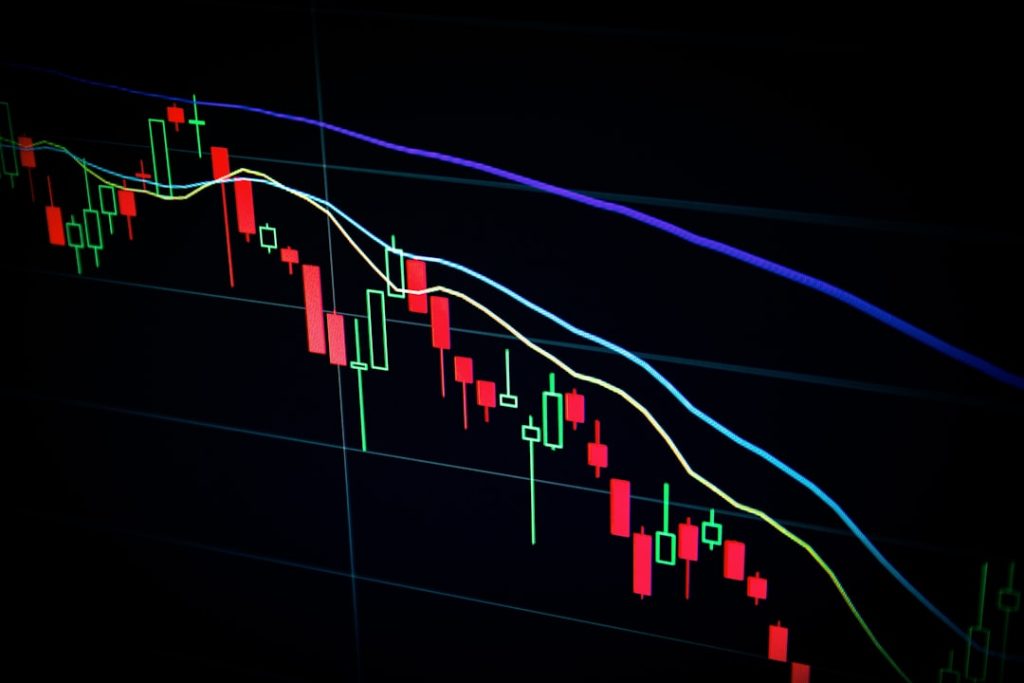
It’s 8:30 AM EST. Non-farm payrolls just printed 50,000 jobs below expectations. EUR/USD spikes 120 pips in ninety seconds. Your position is underwater, your heart is racing, and your finger hovers over the close button. Meanwhile, a professional trader three monitors away doesn’t flinch—she’s already executing protocol four from her spike response playbook. The difference isn’t talent or insider information. It’s preparation. Professionals don’t predict market spikes; they systematically prepare for them with position sizing rules, risk frameworks, and decision trees built long before chaos erupts. This article reveals the exact protocols institutional traders and prop firm desks deploy when volatility explodes—actionable systems you can implement immediately, not abstract theory.
The Professional Mindset: Distinguishing Noise from Opportunity
When Bitcoin drops 8% in twelve minutes, amateur traders panic-sell while professionals open their decision trees. The difference isn’t courage—it’s classification. Professional traders operate from a mental framework that categorizes every spike before executing a single trade, turning what looks like chaos into readable patterns.
Noise Spikes vs. Trend Spikes
The five-minute rule separates professional analysis from retail panic. Spikes that reverse within five minutes typically represent liquidity grabs or algorithmic anomalies—professionals ignore these as statistical noise. Trend spikes, by contrast, maintain directional pressure beyond this threshold and arrive with volume confirmation at least 40% above the 20-period average. A EUR/USD spike accompanied by 2.3x normal volume during London open signals opportunity; a 3 AM Sunday crypto wick with thin order books signals a trap.
Volume tells the story that price alone conceals. Professional traders cross-reference multiple timeframes during spikes—a sudden move on the 1-minute chart means nothing without corresponding structure on the 15-minute or hourly chart. This multi-timeframe validation prevents the costly mistake of chasing momentum that evaporates within minutes.
The Fundamental Catalyst Check
Before assuming any spike will mean-revert, professionals scan for fundamental catalysts. Economic calendars, breaking news feeds, and social sentiment trackers all factor into the classification process. A EUR/JPY spike during a scheduled ECB rate decision follows entirely different probability curves than an identical technical move during quiet Asian session trading. Research shows that 85% of professional traders use automated alerts for volatility spikes, ensuring they never trade blind into catalyzed moves.
Decision trees replace emotional reactions during high-volatility windows. Rather than asking “Should I buy or sell?”, professionals ask sequential questions: Is there a fundamental catalyst? Does volume confirm the move? What’s the timeframe validity? This systematic approach transforms reactive trading into strategic positioning.
Pre-Spike Preparation: Risk Protocols Set Before Chaos Hits
Professional traders don’t scramble when volatility erupts. They’ve already war-gamed the chaos weeks before it arrives. The defining characteristic separating institutional desks from blown-up retail accounts isn’t reaction speed—it’s the ironclad risk framework already humming in the background when markets go haywire.
The 1-2% Stop-Loss Rule
Every position enters the market with a pre-calculated exit wound. Professional traders hardwire stop-losses at 1-2% of total portfolio value before clicking buy or sell. This isn’t negotiable, and it’s never adjusted mid-trade when emotions spike alongside price action.
Here’s how it works in practice:
- $50,000 portfolio: Maximum risk per trade = $500-$1,000
- $250,000 portfolio: Maximum risk per trade = $2,500-$5,000
- $1,000,000 portfolio: Maximum risk per trade = $10,000-$20,000
The math is brutally simple. Risk 2% per trade and you can survive 50 consecutive losses before zeroing out (theoretically—you’d reassess strategy long before that). Risk 10% per trade? You’re statistically eliminated after 10 bad calls. During sudden spikes, slippage can push losses 20-30% beyond your intended stop, which is precisely why professionals build in extra cushion and never exceed that 2% threshold.
Economic Calendar Avoidance Zones
The 15-30 minutes surrounding major economic releases represent dead zones for new position entries. Professional forex and crypto traders treat NFP reports, FOMC decisions, CPI prints, and GDP releases like radioactive events. They either close existing positions entirely or refuse to add new risk during these windows.
The reasoning is mathematical: average EUR/USD volatility spikes 300-400% in the 5 minutes following an unexpected Fed announcement. Bitcoin regularly swings 5-8% within seconds of macro surprises. You’re not trading during these moments—you’re gambling against algorithmic execution speeds you can’t match.
Beyond calendar monitoring, professionals implement automatic leverage reduction when implied volatility crosses critical thresholds. When the VIX punches above 30 or Bitcoin’s realized volatility jumps 50% above its 30-day average, position sizes get cut by 30-50% across the board. This isn’t discretionary. It’s protocol.
Real-Time Response: Position Sizing During Volatility Spikes
When volatility erupts, position sizing becomes the critical difference between controlled risk and catastrophic losses. Professional traders don’t wing it—they follow systematic protocols that automatically scale down exposure as market chaos intensifies.
The VIX-Based Position Sizing Formula
Institutional desks apply a mathematical approach to volatility-adjusted sizing. When the VIX climbs above 30, seasoned traders typically slash position sizes by 30-50% compared to normal market conditions. The logic is straightforward: heightened volatility means larger price swings, so smaller positions maintain equivalent absolute risk.
The calculation works inversely to volatility metrics. If a trader normally risks 2% of capital per trade when the VIX sits at 15, that same trader might reduce to 1% risk when the VIX doubles to 30. This inverse relationship preserves consistent dollar risk even as price movements become more extreme. In crypto markets, where realized volatility can spike 200-300% during flash crashes, this adjustment becomes even more critical.
Professional forex and crypto traders also dynamically adjust leverage. A scalper comfortable with 10:1 leverage during stable Asian session trading will often drop to 3:1 or 5:1 when major news hits or when Bitcoin experiences one of its characteristic 10%+ intraday swings.
Circuit Breaker Protocols
Beyond gradual adjustments, pros implement hard stops on new position entries. These circuit breakers activate at predefined volatility thresholds—often when the VIX exceeds 40 or when crypto assets move 15% in under an hour. At these extremes, liquidity evaporates and spreads widen dramatically, making entry prices unreliable.
The protocol is binary: when extreme volatility triggers activate, no new positions are initiated regardless of apparent opportunities. Existing positions remain under management, but fresh capital stays sidelined until conditions normalize. This discipline prevents the common retail mistake of aggressively adding exposure precisely when risk is highest.
Advanced Tools: What Professionals Monitor That Retail Traders Miss
While retail traders frantically refresh candlestick charts during market spikes, institutional desks are analyzing data streams most casual traders don’t even know exist. The gap between professional and amateur spike response often comes down to information asymmetry—specifically, the tools and metrics that reveal what’s actually happening beneath the surface chaos.
Order Flow and Level 2 Data
Professional traders don’t just watch price movement; they watch who’s moving the price. Order flow analysis and Level 2 market depth data expose the institutional fingerprints left during volatility events. When a sudden spike hits, pros immediately check:
- Bid-ask imbalances showing aggressive buying or selling pressure
- Large block orders indicating institutional positioning changes
- Iceberg orders where big players hide their true position sizes
- Time and sales data revealing the actual execution prices and volumes
This granular view explains why professional traders often enter positions that seem counterintuitive to retail participants watching standard charts. They’re seeing the 10,000-share institutional buy orders absorbing a selloff while retail traders only see red candles.
High-frequency algorithms take this further, executing trades in microseconds based on order flow patterns. Some firms process over 10,000 trades per second during volatility spikes, capturing spreads and inefficiencies that exist for fractions of a second.
Crypto On-Chain Signals
In cryptocurrency markets, professionals monitor blockchain data that retail traders completely ignore. Exchange inflow and outflow metrics provide advance warning of potential price movements:
- Large exchange inflows (especially to spot exchanges) often precede selloffs as whales prepare to liquidate
- Exchange outflows to cold wallets signal accumulation and reduced selling pressure
- Whale wallet movements tracked through platforms like Whale Alert reveal institutional positioning
When Bitcoin spiked through resistance levels seven times in 2023 with 10%+ intraday swings, professional traders using on-chain analysis captured 3-5% returns by identifying accumulation patterns hours before retail momentum kicked in. According to industry surveys, 85% of professional traders now use automated volatility alerts calibrated to these metrics, compared to just 23% of retail participants.
Volatility Trading Strategies: How Pros Profit from Market Chaos
When the VIX rockets past 30 or Bitcoin drops 12% in thirty minutes, amateur traders freeze while professionals execute precision strategies designed specifically for chaos. These aren’t gambling moves—they’re calculated protocols that turn turbulence into trading opportunities.
Delta-Neutral Hedging for Market Makers
Market makers and sophisticated institutional desks deploy delta-neutral strategies that profit from volatility itself rather than directional movement. The approach is elegant: simultaneously hold offsetting positions that cancel out directional risk while capturing the inflated premiums that spike during volatility surges.
In crypto markets, this often means holding spot Bitcoin while shorting perpetual futures contracts at identical notional values. When volatility explodes, funding rates on perpetual swaps can surge to 0.10-0.30% every eight hours. Market makers collect these premiums repeatedly while maintaining zero net exposure to price direction. The key metric pros watch is implied volatility expansion—when it jumps 40-60% above realized volatility, the strategy becomes particularly profitable.
For forex traders, delta-neutral hedging typically involves options spreads like straddles or strangles positioned around major currency pairs during anticipated volatility events. Professional traders reduce their delta exposure by 30-50% when volatility indicators flash red, capturing premium decay as positions stabilize.
The Fade and Dip-Buying Playbook
Fading the spike requires confirming that no fundamental catalyst justifies the move. Professionals check three things within 60 seconds: economic calendar for scheduled releases, news wires for breaking developments, and order flow for institutional activity patterns. If the spike appears technical rather than fundamental, fade strategies activate.
The protocol is strict. Wait for the initial volatility burst to exhaust—typically 15-45 minutes for forex pairs, 30-90 minutes for crypto assets. Enter mean-reversion positions only after the first lower high forms on a 5-minute chart, with stops placed just beyond the spike extreme.
Dip-buying follows volatility clustering analysis. When Bitcoin experiences a 10%+ intraday drop, historical data shows an 85% probability of at least a 3% bounce within the following two hours. Professional traders scale into positions across three entries: 25% allocation at the initial support test, 35% if price breaks but recovers within 15 minutes, and 40% if volatility contracts while holding above the panic low.
Case Studies: Professional vs. Retail Response to Historic Spikes
The difference between professional and retail trading protocols becomes painfully visible when markets explode. Three historic events reveal exactly how preparation separates survival from catastrophic loss.
The Swiss Franc Flash Crash: January 15, 2015
When the Swiss National Bank unexpectedly abandoned its currency peg, EUR/CHF plunged 30% in minutes. Professional traders operating under institutional risk frameworks absorbed losses of 2-3% maximum. Their secret? Pre-positioned stop-losses that triggered automatically, even during extreme slippage.
Retail traders? A bloodbath totaling $225 million in losses across multiple brokers. Most had overleveraged positions without hard stops, believing the SNB peg was “guaranteed.” Some woke up to margin calls exceeding their entire account balance by 300%.
The professional playbook:
- Maximum 1-2% risk per position before the event
- Stop-losses placed at guaranteed levels with premium brokers
- Position sizing reduced 40% in the week prior due to SNB meeting uncertainty
- Diversification across currency pairs prevented total portfolio wipeout
March 2020: COVID Panic and the VIX Spike
The VIX rocketed to 82.69—the highest reading since 2008. Professional traders immediately slashed position sizes by 30-50% as volatility indicators screamed danger. They recognized that when the VIX crosses 30, normal strategies break down.
Retail traders did the opposite. They doubled down, buying “the dip” with full position sizes, only to watch markets gap down another 10% overnight. Professionals used that retail buying to exit positions and hedge with VIX calls.
Bitcoin’s 2023 Flash Crashes: Seven Opportunities
Bitcoin delivered seven separate intraday drops exceeding 10% throughout 2023. Professional crypto desks captured 3-5% average returns by deploying capital in the 2-hour window following each crash. They bought systematically at predetermined levels: 8% down, 12% down, 15% down.
Retail traders panic-sold at the bottom, crystallizing losses. The pattern repeated seven times. Same crash, different date, identical emotional response.
Your Action Plan: Implementing Professional Spike Protocols
Professionals don’t wing it when volatility hits—they execute pre-built systems that run on autopilot. You need the same infrastructure before the next spike catches you flat-footed.
Setting Up Your Alert System
Start by configuring automated alerts across three critical layers:
- Volatility threshold alerts – Set notifications when the VIX crosses 25 and 30, or when your primary trading pairs move 3%+ in under 15 minutes. Most brokers offer this natively; TradingView and Coinigy provide excellent alternatives for crypto markets.
- Economic calendar notifications – Subscribe to push alerts for high-impact events (NFP, FOMC, CPI releases). Configure reminders 30 minutes before these releases—85% of professional traders use automated alerts compared to just 23% of retail traders, giving them a massive execution advantage.
- Position-specific stops – Program automatic stop-losses at 1-2% of your total portfolio value per position. No exceptions, no manual overrides during emotional moments.
Creating Your Spike Response Checklist
Build a physical or digital checklist you’ll reference when alerts trigger:
- Pause and assess – Wait 60 seconds before any action. Check if the move is news-driven or technical.
- Review existing positions – Are your stops properly placed? Do you need to reduce size by 30-50% if volatility is elevated?
- Calculate position size – Cut your standard size in half during spike conditions.
- Verify liquidity – Check order book depth before entering—thin books amplify slippage.
- Execute with limits – Use limit orders, never market orders during spikes.
Practice this protocol with micro-positions (0.1% of capital) during the next 5 volatility events. Track your execution speed and emotional response. Only graduate to full-size trades after demonstrating consistency across multiple spike scenarios.
Professional traders don’t predict market spikes—they prepare for them with ruthless discipline. The seven protocols outlined here aren’t proprietary secrets locked away in hedge fund vaults. They’re systematic approaches anyone can adopt, starting today. The difference between professionals and amateurs isn’t access to better information or faster execution—it’s the commitment to protocol over panic. When the next volatility explosion hits, you won’t need to guess what to do. You’ll execute the same frameworks that institutional desks rely on daily. Start with one protocol: implement the 1-2% stop-loss rule on every position you open this week. Master that foundation, then layer in volatility-adjusted position sizing, then automated alerts. Build your spike response system one protocol at a time. The next 15% Bitcoin drop or NFP surprise is coming—the only question is whether you’ll panic or execute.